A common and genuinely costly mistake is spending ₹40,000+ on a professional pen display before even knowing if digital art is something you’ll stick with. A ₹3,000-6,000 entry-level pen tablet teaches the exact same foundational skills — pressure control, line confidence, layer management — as a premium model, and you can always upgrade once your needs genuinely outgrow the hardware.
We compared three genuinely different tablets across the price range based on real driver stability and pen feel, not just pressure-level numbers on the spec sheet — because as any working artist will tell you, a tablet with unreliable drivers is frustrating regardless of how impressive its specs look on paper.
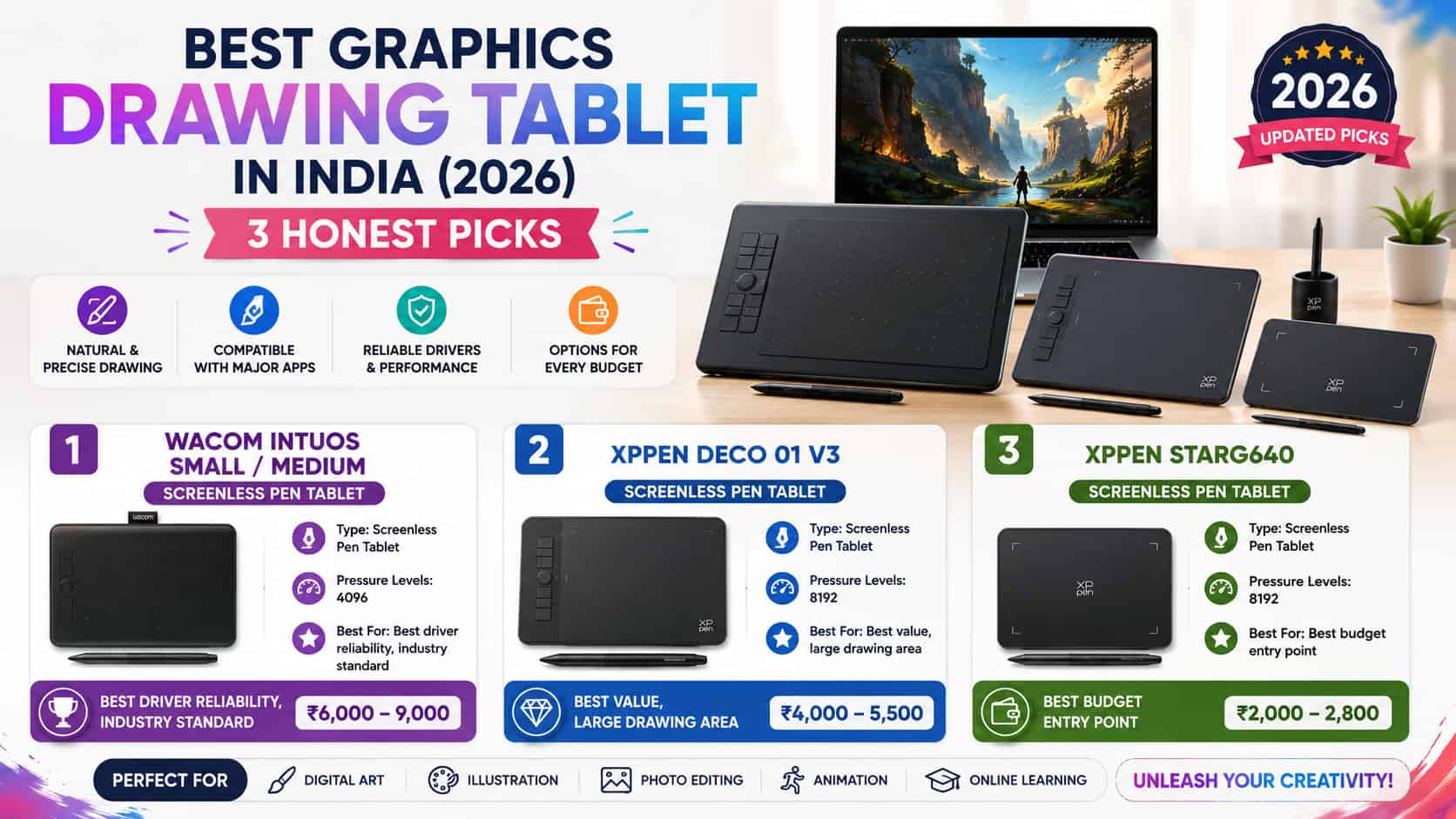
Quick Comparison
| Rank | Model | Type | Pressure Levels | Best For | Approx Price |
|---|---|---|---|---|---|
| 1 | Wacom Intuos Small/Medium | Screenless pen tablet | 4096 | Best driver reliability, industry standard | ₹6,000–9,000 |
| 2 | XPPen Deco 01 V3 | Screenless pen tablet | 8192 | Best value, large drawing area | ₹4,000–5,500 |
| 3 | XPPen StarG640 | Screenless pen tablet | 8192 | Best budget entry point | ₹2,000–2,800 |


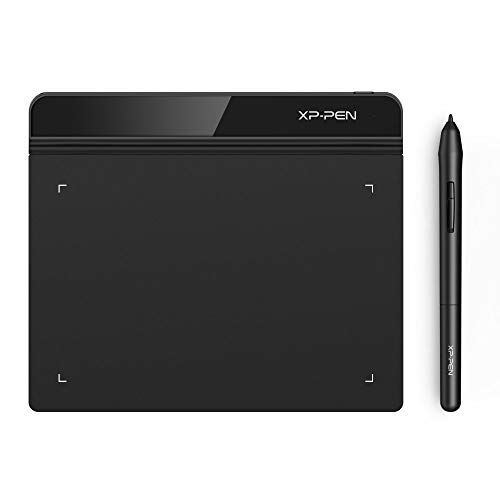
1. Wacom Intuos (Small/Medium) — Best Driver Reliability, Industry Standard
Wacom has been the professional standard in this category for decades, and the real reason working artists pay a premium for it isn’t flashy specs — it’s driver stability. Pen lag and driver crashes are a genuine, common frustration with cheaper tablets, and Wacom’s refinement in exactly this area is a big part of what you’re paying for, alongside a textured, paper-like drawing surface that many artists find more natural than smoother alternatives.
Real trade-off worth knowing: at 4096 pressure levels, the raw spec number is lower than the 8192 levels on the XPPen options below — in practice, the difference is barely perceptible to most users, and Wacom’s driver stability advantage matters far more day-to-day than the pressure-level number itself.
- ✅ Most reliable drivers in the category — genuinely fewer crashes and pen-lag issues
- ✅ Textured surface with natural, paper-like pen resistance
- ✅ Industry-standard compatibility across all major creative software
- ⚠️ Priced above comparable XPPen alternatives with similar core functionality
- ⚠️ Smaller active drawing area than XPPen’s Deco 01 V3 at this price tier
Best for: Students and hobbyists who want the most reliable, frustration-free experience and are willing to pay a bit more for it.
- Brand: Wacom
- Connectivity Technology : USB
- Pressure Sensitivity: 4096 Levels
2. XPPen Deco 01 V3 — Best Value, Large Drawing Area
This genuinely delivers most of the core experience of a pricier tablet — a large active drawing area, a battery-free pen with 8192 pressure levels and tilt sensitivity, and modern USB-C connectivity, all at meaningfully less than Wacom’s equivalent. XPPen has been making drawing tablets since 2005 and operates in over 163 countries, so this isn’t an unproven brand despite the lower price.
Real trade-off worth knowing: driver stability, while genuinely improved over XPPen’s older models, still doesn’t quite match Wacom’s refinement — most users won’t notice a meaningful difference in daily use, but it’s worth knowing before buying if driver reliability is your top priority.
- ✅ Large active drawing area for the price
- ✅ 8192 pressure levels with tilt sensitivity, battery-free pen
- ✅ Modern USB-C connectivity
- ⚠️ Driver stability a small step behind Wacom’s industry-leading reliability
- ⚠️ Surface texture less refined than Wacom’s paper-like feel
Best for: Students and intermediate artists who want strong value and a larger working area without paying Wacom’s premium.
- ✅ [Large Active Area]: The XPPen Deco 01 V3 features a generous 10 × 6.25-inch (254 × 158.8 mm) active drawing surface, …
- ✅ [16,384 Pressure Sensitivity Levels]: With 16K pressure sensitivity, the stylus captures fine variations in line width…
- ✅ [Complete Bundle]: Each package includes the Deco 01 V3 tablet, P05D battery-free stylus, stylus stand, 10 replacement…